


ServiceXRG
  • Your Challenges
    • Overview
    • Strategic Support Assessment
  • Our Solution
    • Overview
    • Achieve Strategic Support
    • Our Process
    • Strategic Support Framework
    • Membership
  • Why ServiceXRG
    • Overview
    • Capabilities
    • Clients
    • Team
  • Resources
    • Resource Library
    • Blog
    • Support Leadership, Unfiltered
  • Member Login
ServiceXRG
  • Member Login
  • Strategic Support Assessment
  • Let’s Talk
  • Your Challenges
    • Overview
    • Strategic Support Assessment
  • Our Solution
    • Overview
    • Achieve Strategic Support
    • Our Process
    • Strategic Support Framework
    • Membership
  • Why ServiceXRG
    • Overview
    • Capabilities
    • Clients
    • Team
  • Resources
    • Resource Library
    • Blog
    • Support Leadership, Unfiltered

Blog : Support Demand Trends

  • Previous Post
  • All Posts
  • Next Post

Support Demand Trends

By Tom Sweeny October 12, 2022

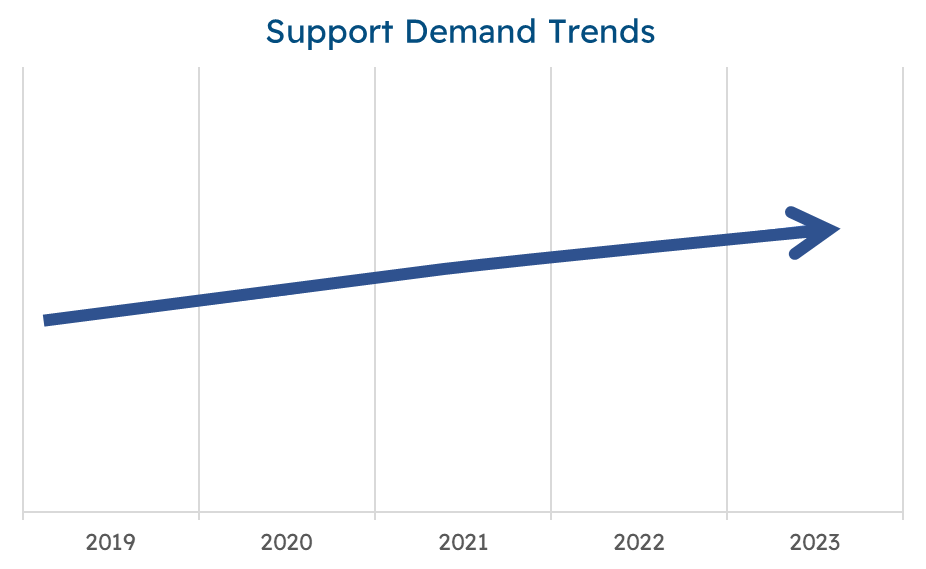
Support demand grew at 11% in the past year, and we anticipate that demand will continue to grow for most companies but at a slower rate. Support demand growth stems from positive factors: new customers and more proactive engagement; and negative factors: low product quality.

Your understanding of how demand for Support will change is critical to planning, both short-term and long-term.

Support Trends

Growth is reported by 59% of companies primarily due to positive factors such as new customers, more proactive engagement, and negative factors including product quality issues.
Some (13%) companies report lower demand – some due to product quality improvements and sometimes for negative reasons including fewer customers, churn, or disengagement.

Support Demand Trends 2019 – 2023
Source: ServiceXRG State of Support 2023

High Support demand growth influencers

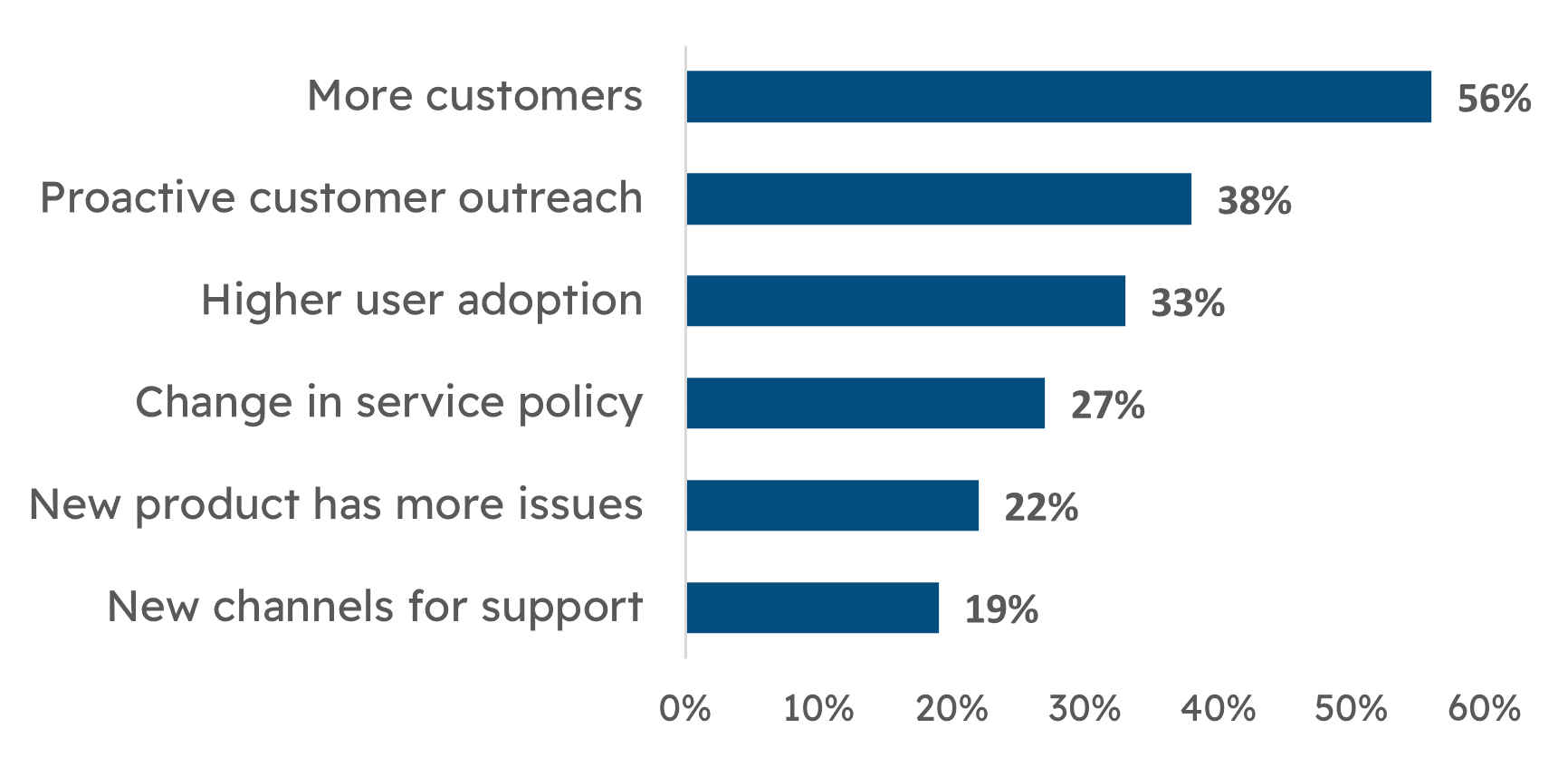
Factors that contribute to high growth in Support demand include:

  • Aggressive sales and marketing initiatives to add more customers
  • Proactive customer outreach to drive adoption
  • Changes to products that introduce more complex capabilities
  • Declining quality of product (more issues)
  • Little to no effective efforts to prevent support demand or increase customer self-sufficiency

Support Demand Drivers
Support Demand Drivers

Source: ServiceXRG State of Support 2023

Declining Support demand influencers

Factors that contribute to a reduction in Support demand include:

  • Loss of customers (churn)
  • Customer disengagement—they own the product but use it less.
  • Product performance and/or usability improvements
  • Efforts to build customer product proficiency
  • Effective self-help initiatives
  • Proactive and preventive care to reduce support issues

Conclusion and recommendations

While it is essential to understand how Support demand will change in the year ahead, leaders must always keep their fingers on the pulse of Support demand if they expect to remain prepared to respond to customer needs. Factors that influence support demand may be tied to specific Support initiatives or originate beyond the control of Support—that is, within Sales, Success, Marketing, or Product Development groups.

Consider the following:

  • Establish a realistic forecast for new Support demand based on Sales projections.
  • Examine your company’s product roadmap to identify any product changes that will increase customers’ need for Support.
  • Project the effect of Support and Customer Success initiatives that promote increased product use and adoption.
  • Forecast the effect of customer churn.
  • Forecast the effect of efforts to reduce or mitigate support demand through self-help and prevention initiatives.


eBook: The State of Support

Support is undergoing a fundamental shift—from operational cost center to strategic driver of customer and business success.

This report shares key findings and practical recommendations from ServiceXRG’s latest research with support leaders and practitioners, revealing how top-performing organizations are evolving their support models to drive adoption, retention, and growth.

Download the State of Support report to understand where the industry is headed—and how to stay ahead.

Get a Copy

If support is strategic, your roadmap should be too.

We help support organizations move beyond reactive improvement by defining the capabilities, metrics, and execution plan required for long-term success.

Strategic Support Framework
  • Previous Post
  • All Posts
  • Next Post

Subscribe for even more resources and the latest in your inbox.

"*" indicates required fields

This field is for validation purposes and should be left unchanged.
Name*

By clicking the "Submit" button you accept and agree to be bound by the Terms of Use and Privacy Policy.

Related Posts

  • 2.13.26 Read Time: 3 Mins

    AI’s Promise, Leadership’s Test

    As AI adoption accelerates, some organizations will choose to use AI to elevate support’s strategic relevance, while others will automate activity without improving outcomes. Here’s what makes the difference.

  • Read Time: 3 Mins

    Choosing the Battles That Build Leadership Credibility

    Strategic support leaders choose moments where support’s perspective can materially improve outcomes the business already cares about. Here’s how to know which battles to fight.

  • Read Time: 4 Mins

    From Reactive Support to Strategic Relevance: A Leadership Journey

    Where is your support organization on the journey from reactive containment to strategic relevance? Here’s the roadmap—and how to recognize which stage you’re in.

ServiceXRG

© Service Excellence Research Group, LLC 2026. All Rights Reserved.

Website by Imagebox

Contact Info
  • Email: info@servicexrg.com
  • Phone: 800-475-0089
Social Media
  • LinkedIn
  • Newsletter
  • Twitter